
Approval triggers
Council approval triggers can involve height, surcharge (extra load above the wall), proximity to buildings or other retaining walls and combined fence height.
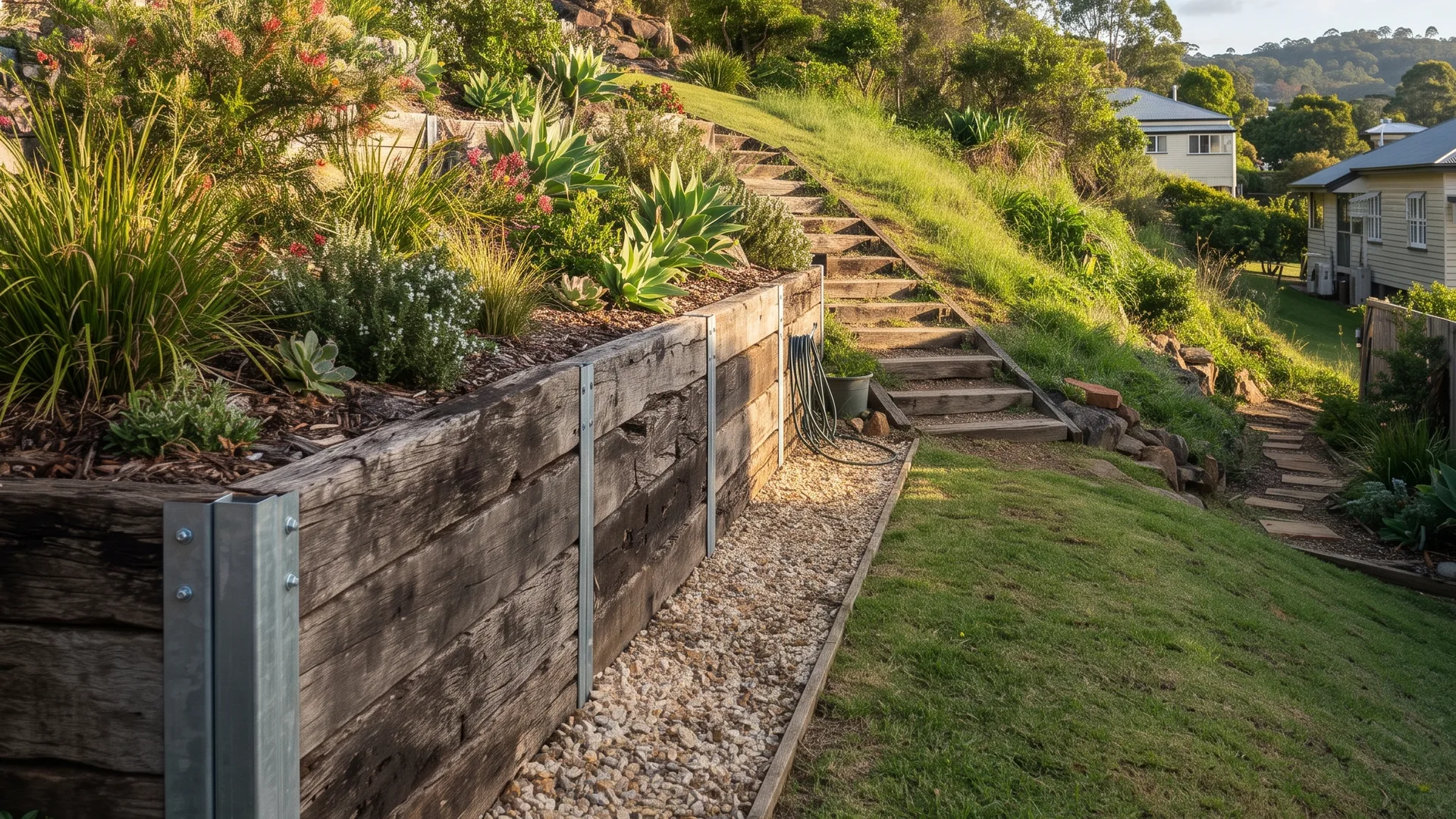
Retaining wall repairs and new walls
Repair failed walls, replace leaning structures and plan new retaining walls for Toowoomba slopes, clay blocks and drainage-sensitive yards.
A retaining wall has to hold the ground safely, move water away from the retained side and fit the way the yard is used. Height, load, access, clay movement, nearby structures and Council or certifier triggers all affect the work.
Use the form to describe the failed wall or new wall needed, the yard access, water movement and anything sitting above the retained area. Those details help a provider judge whether the job is repair, replacement, new construction or design-led retaining work.
Retaining wall scope details still depend on inspection, site access, drainage, retained load and a written scope.
Council approval triggers can involve height, surcharge (extra load above the wall), proximity to buildings or other retaining walls and combined fence height.
Subsoil drainage, surface runoff and discharge points should be understood before the wall is priced.
Side access, spoil removal, temporary support and work around fences or driveways can change the quote more than material choice.
Choose the closest retaining wall service. Each page explains the wall type, common failure points, drainage needs and site conditions that can change the work.
Durable sleeper walls for sloping Toowoomba yards, boundary levels and low-maintenance landscaping.
Block wall scopes for raised gardens, boundary changes and stronger architectural finishes.
Timber sleeper walls for lower garden beds, side paths and budget-sensitive yard shaping.
Repair and replacement advice for leaning, cracked, draining or movement-affected retaining walls.
Engineering-ready retaining wall scopes for higher walls, surcharge loads and approval triggers.
Replacement planning for tired walls, failed drainage, changed levels and staged access constraints.
Range suburbs, western growth areas and Highfields acreage all create different wall, access and water-management questions.
Rangeville sites often involve steep eastern fall and views toward the Lockyer Valley.
East Toowoomba sites often involve older character lots with garden edges and heritage-sensitive streetscapes.
Middle Ridge sites often involve elevated southern ridges and larger split-level homes.
Centenary Heights sites often involve mature suburban blocks with sheds, fences and paved side access.
Newtown sites often involve western black-soil yards where older low walls often move.
Harlaxton sites often involve northern slopes below the range with mixed rock and clay conditions.
Wilsonton sites often involve flatter north-western clay blocks with access and drainage constraints.
Glenvale sites often involve large western lots where retaining often shapes driveways and pads.
Kearneys Spring sites often involve creek-flat edges where water movement matters as much as wall height.
Common questions before retaining wall repair, replacement or new work.
Talk to a specialist
Request help with your retaining wall
Wall purpose, access, drainage and approval triggers help a provider focus on the right retaining-wall work.